What Pain is Made from: The Intersecting Science of Endo, Inflammation, and Sensitisation (Part 2/3)
The long road to working out what chronic pain is made from, and the science underneath. Part two of three
The onset
In June 2024 I started to feel like my body was on fire, which is how I described it to clinicians, both psychologists and physicians. I went to an osteopath because I had begun to tremor in my arms and neck when I used a trigger ball to release muscle tension, and I spoke to my GP about my sleep and never feeling relaxed. The tremors got worse and turned into whole body experiences. They felt good at first, like releasing serious tension, but as they grew longer and more vigorous, I became beholden to them.
I took some time off in early 2025, assuming a couple of months with family and friends would reset me and I would come back good as gold. After visiting my brother in Canada, I came back to Melbourne at the end of March and it wasn’t easing up. I was still seeing an osteo twice a week, consulting a Chinese medicine practitioner, visiting massage therapists, and doing red light therapy alongside pelvic rehab physio. The idea of networking, expressions of interest (EOIs), and getting back to work came with big, cartoonish exclamation marks.
I experienced constant upper-body pain at varying degrees. The flare-ups were a part of life each week. Whether it was travelling in the car, being around children (a constant stimulus), encountering bright lights, or having a minor tiff with my partner, the pain dial would amp up. I felt like a human whack-a-mole, entirely unsure of what symptom was going to pop up next.

The well loved kids game Whack-a-mole
The Long Road
None of this arrived out of nowhere. Over the years, I collected a series of diagnoses. Each one named only a single piece of the puzzle and then went quiet. They did not join up, and none opened a road to rehabilitation or resolution.
When you live with widespread pain for a long time, you start to lose count of the conditions. I felt embarrassed, too, sure people would think I was a hypochondriac, or that it was all in my head.
My journey started at age 14 in my knees and legs. At 20, I was diagnosed with the neurodivergent condition ‘Developmental Coordination Disorder’ (DCD, traditionally called dyspraxia). I put my musculoskeletal pain down to that, back when there was little awareness of the condition, or neurodivergence for that matter, and mostly blank faces when I raised it. At 24, a pelvic physio assessed me for poor coordination and burning pain in my hips and sacrum, calling it functional scoliosis and muscular weakness.
At 29, I had my knees, hips, and shoulders X-rayed. They found nothing but a cervical rib. Meanwhile, my digestion worsened. I tried restrictive diets, went pescatarian, and cut out high-FODMAP foods like onion and garlic. In June 2021, at age 35, an endoscopy and colonoscopy resulted in a diagnosis of irritable bowel syndrome (IBS).
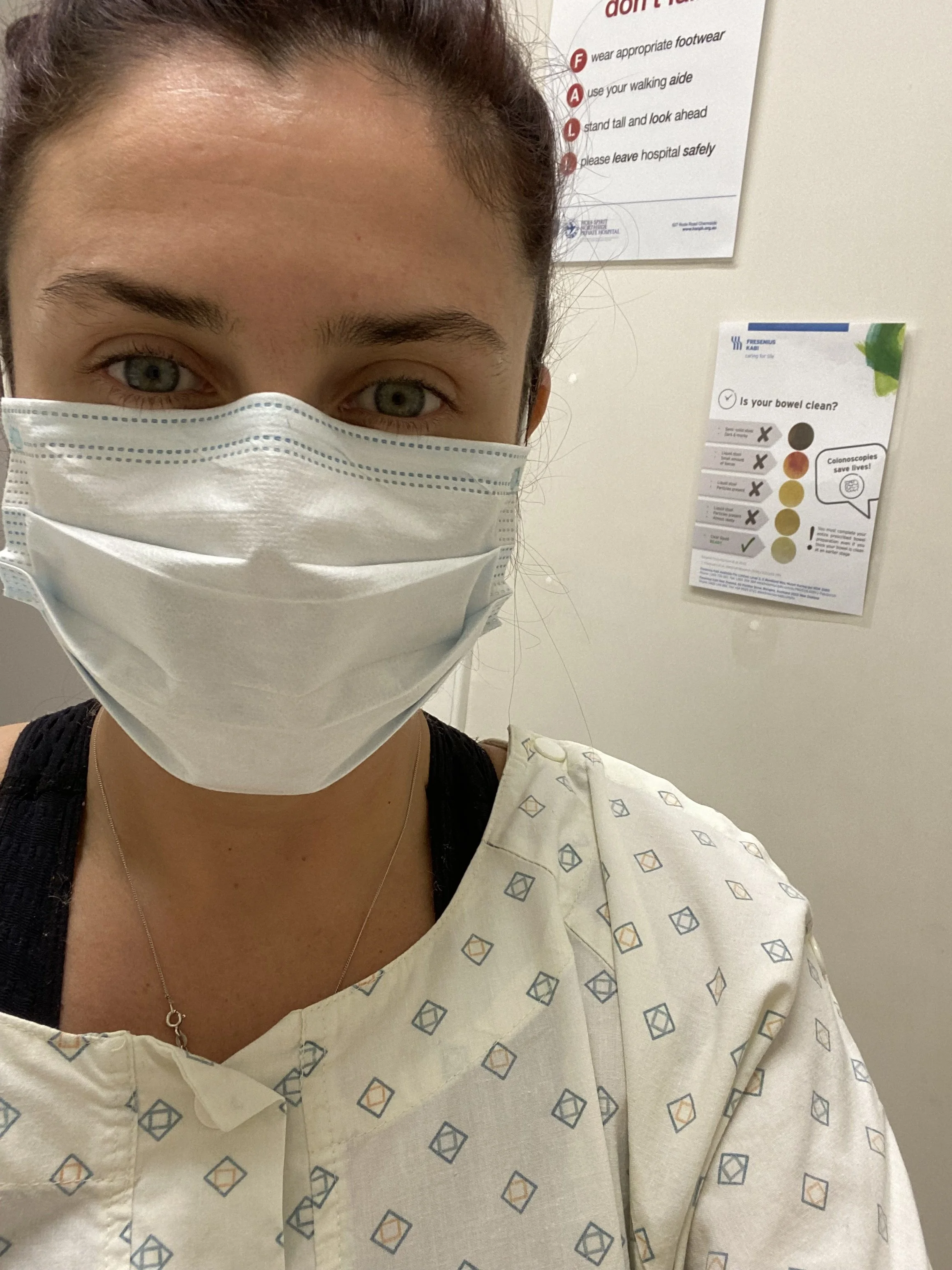
Procedural selfie during the COVID years
In January 2023, at age 36, that trajectory expanded to include a diagnosis of endometriosis. Then, everything peaked at once and the whole system tipped over. When intense whole-body tremors escalated toward the end of 2024, my GP referred me to a neurologist. It was during that physical escalation that the aching vulnerability of my nervous system was given another name: fibromyalgia. Getting back from that tipping point has been a long road of rehabilitation.
Endometriosis & Central Sensitisation
We cannot say for sure that this anatomical damage explains the years of inflammation in my abdomen, or the pain in my hips, sacrum, shoulders, and neck. Honestly, no one can. Endometriosis research is still remarkably thin. But the fact that I am left wondering, rather than knowing, says a lot about how little we still understand about women’s bodies and hormones.
To understand why the system broke down, you have to redefine the disease. Endometriosis tissue is similar to the womb lining, but it grows outside the uterus. It responds to hormonal cycles and can become incredibly sticky, attaching to organs, ligaments, and the pelvic wall. It is a whole-of-body condition that happens to involve the reproductive system, not a reproductive condition that occasionally strays. Once you see it that way, a dozen separate problems look like one entity.
This physical entanglement directly triggers central sensitisation. This happens when the nervous system slips into an overprotective mode and amplifies sensory signals as pain. Because of this volume dial shift, ordinary things like loud noises, busy streets, harsh lights, a stressful week, or everyday movement are misread by the body as immediate danger. You feel pain because your brain believes it is protecting you. There is growing evidence that this hypersensitivity links endometriosis, fibromyalgia, and chronic pain more broadly.
This was the hyper-reactive state everything else had been feeding. The puzzle pieces from the years before (the coordination issues, musculoskeletal pain, and gut distress) all sat on top of a nervous system that was becoming easier to set off. Chronic inflammation drives that sensitisation, and endometriosis is a powerful, constant source of it.
That was the core reasoning behind the surgery: by excising the disease and lowering the systemic inflammation, the aim was to bring the nervous system's sensitisation down with it. That is the exact change the surgery has helped most.
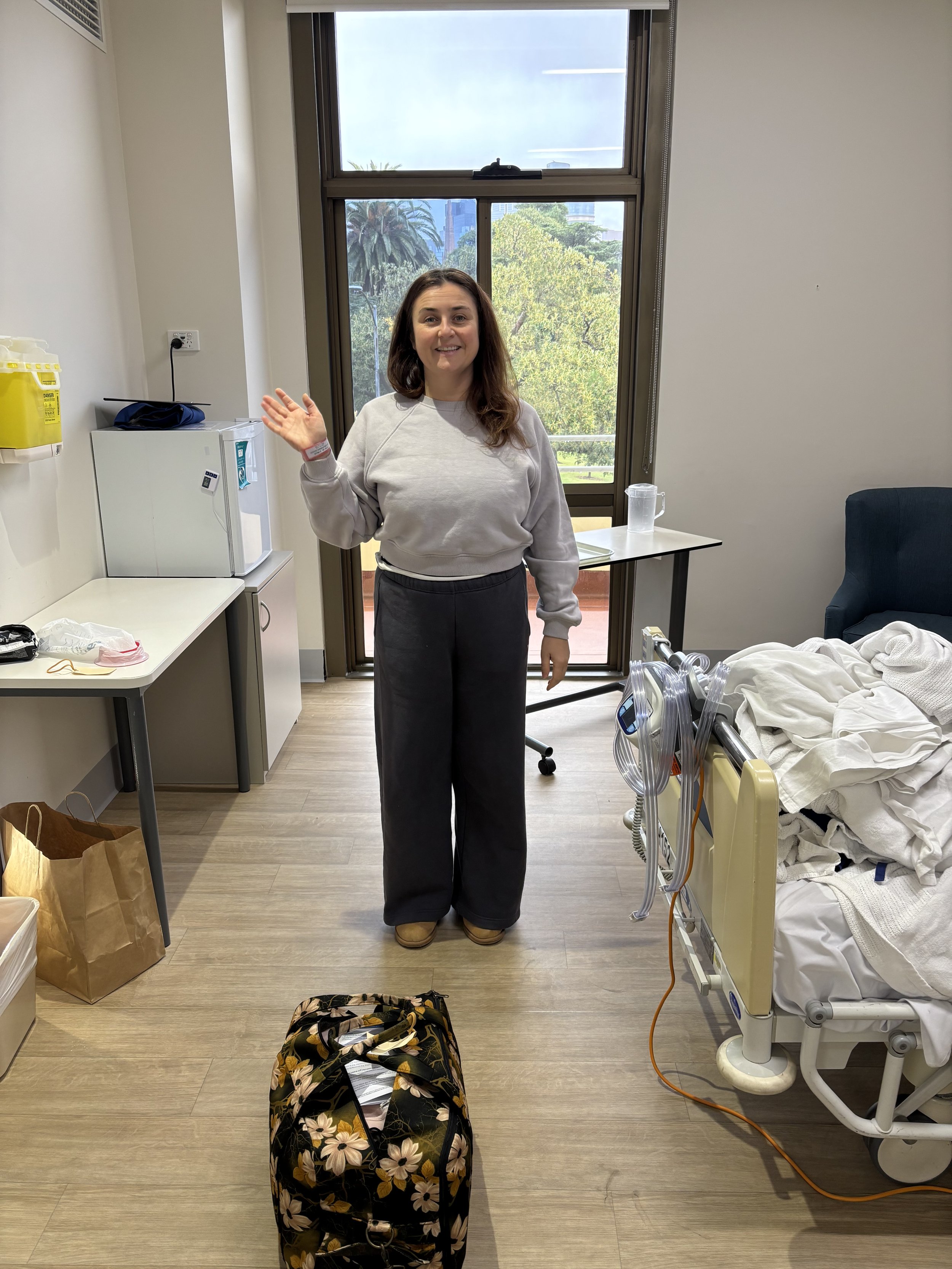
Being discharged post-surgery in June 2025
How It All Connects
What I find strangely comforting is that the science is finally catching up, proving these conditions travel together. A large cohort study found that fibromyalgia and broader chronic pain both cluster tightly around endometriosis, occurring roughly two to three times more frequently than in women without it, alongside a high prevalence of migraines.
When you live at the intersection of overlapping chronic conditions, a sensitised nervous system, and systemic inflammation, it validates your reality. It reads less like an unrelated string of coincidences and more like one connected system.
Understanding exactly what my pain is made from, and actively lowering the inflammation underneath it, is what helps me navigate daily life. It is what allows me to live on the right side of pain.
Sources
1. npj Women’s Health 2025, endometriosis hidden comorbidities (fibromyalgia and chronic pain clustering, migraine): https://www.nature.com/articles/s44294-025-00073-z
2. Endometriosis and fibromyalgia co-occurrence, comparative study: https://www.sciencedirect.com/science/article/pii/S2949838425000301
3. Neurodivergence, hypermobility and pain, summary of Dr Jessica Eccles’s work (Frontiers in Psychiatry, 2022): https://www.chronicpainpartners.com/neurodivergence-and-hypermobility-understanding-the-eds-connection/
4. Endometriosis, hypermobility and ADHD overlap (accessible overview): https://www.paramotion.org/post/endometriosis-hypermobility-adhd-connection
5. International Association for the Study of Pain, overview of central sensitisation: https://www.iasp-pain.org/publications/relief-news/article/central-sensitization/
6. Australian Institute of Health and Welfare, Endometriosis in Australia: https://www.aihw.gov.au/reports/chronic-disease/endometriosis/contents/about
7. Healthdirect, Fibromyalgia: https://www.healthdirect.gov.au/fibromyalgia