On the Right Side of Pain: Living with Chronic Pain (part 1of 3)
It's National Pain Week here in Australia, and this year's campaign line is Pain Lives Here. So here I am, noticing out loud.
I have lived with some form of pain since I was 14, and in January 2023 I was diagnosed with stage 4 endometriosis. It left my nervous system sensitised, quick to read ordinary things as a threat, and that sensitivity is what I keep returning to below.
This is the first of three short pieces, about what it is like to live with pain now.
Picture this
If you have never lived with chronic pain, it can be genuinely hard to picture, but before I start, I will caveat by saying you might want to dust off what you remember about anatomy. I haven’t studied biology since I was 14, so my knowledge here is basically from living, being curious and learning to repeat myself to a million care professionals.
In my world a bad pain flare-up can run ten or eleven days. It starts with a niggling ache. Neural pain, if you have ever experienced it, radiates, and so for me it begins in and around my armpit and spreads up the back of my neck and the muscles closest to my jaw in the front (they are called scalenes, from when we had scales, I like to think). My neck has stiffened, and I can’t release it through clicking, which I know is gross but does relieve pressure. The pain then travels down my arm into my hand, and my ability to do day to day tasks reduces significantly. The mind cannot ignore the pain anymore, and if I don’t take steps towards an intervention at this point then lights start to glare, and I get the tingle of a migraine to stack on top. Everyday movement, the kind you never think twice about, turns into something you have to negotiate. The world shrinks to the size of my house, and then to the size of the sofa, and finally bed, with the dog and the same reruns on a loop. From the outside, you might just see someone who cancelled again. From the inside, it is a body that has pulled up the drawbridge.
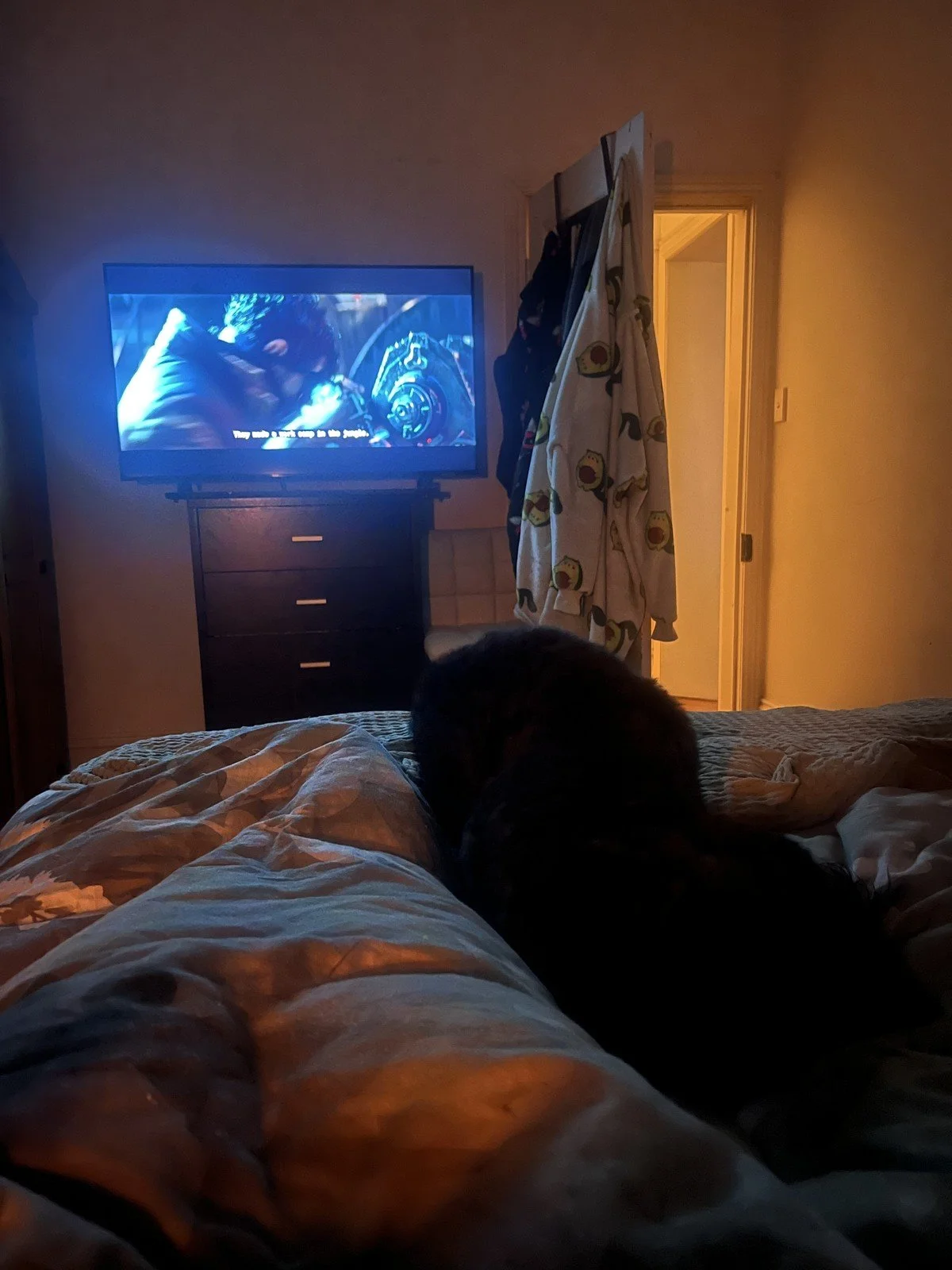
Piper and I hanging out in bed with Lord of the Rings
On the right side of pain
Somewhere along the learning journey I started using the phrase "being on the right side of pain". If I am to live with chronic pain, the first hurdle is to accept that I will likely live with pain the rest of my life, in some form or capacity. Therefore, the goal cannot be to eliminate pain fully, but to start coming to terms with it as a part of how I live and then try to make its voice as small as possible. Preparing myself mentally to acknowledge it, to navigate it, and to reduce the likelihood of a major flare-up, that is a win for me. Why? Because I don’t want to live in fear or frustration, waiting for the next time I feel pain or an ache, migraine, skin reaction and so on.
In my experience, a big part of reducing its impact on my life has been consistency, and so my benchmark became simple: if I could work towards 9,000 steps a day, a couple of reformer classes a week and no major physical stir, then I was on the right side of pain. I didn’t feel like I’d failed if I hadn’t met the target, it just meant that I had a rule of thumb I could refer back to, should a flare-up raise its ugly head. Reducing sensitivity and improving tolerance became a process that I will use as my foundation guideline for the rest of my life. Even though I am doing really well at the moment, despite some big life-changing events, I have to be mentally prepared for falling off the good-side-of-pain horse and having a framework for rebooting that works for me.
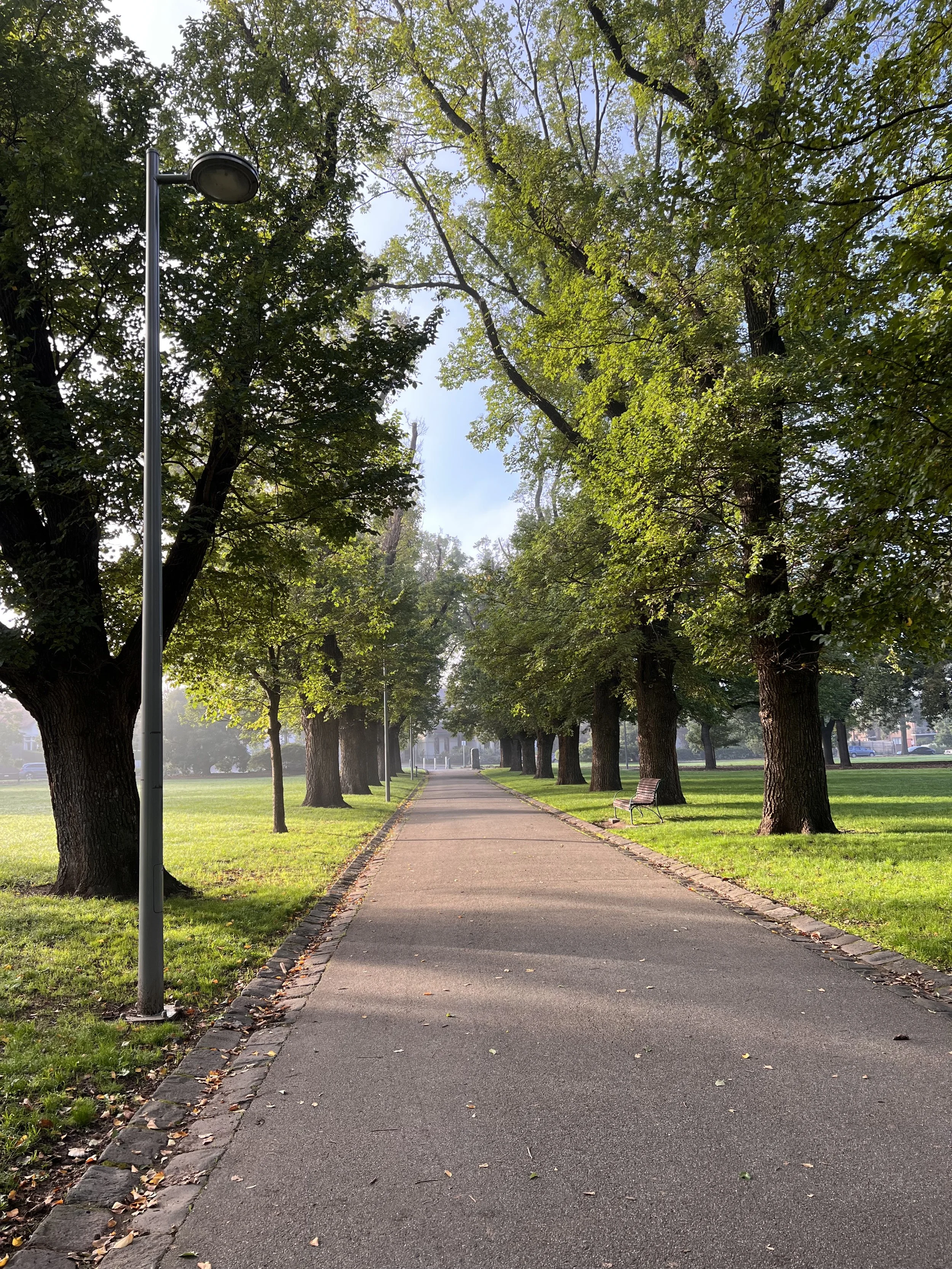
Carlton Gardens, my local park, where I have got back on the horse many a time.
A little more room to move
While we won’t get into the diagnoses and history behind it all here, the good news is that the more I listen, tune in and prioritise my own health, the more positive feedback my body gives me. Slowly but surely the flare-ups have reduced, the fear is less, and life is more fulfilling. There is bigger news too: the one-year post-op ultrasound shows the endometriosis has been suppressed, with only minimal adhesions found, which has significantly reduced the inflammation in my body and along with this, stress responses. It has been a long, deliberate process.
So where am I now? Genuinely doing well even though I’m right at the beginning of this (both can be true at once). Part of what I am learning is how little of this is a choice. When something big and unexpected and disruptive happens, and this last stretch has included grief, it can land as an involuntary somatic trigger which, before, could have tipped me into one of those long flare-ups I described earlier, the ones where the world shrinks to the size of the sofa. This time it did not swallow me whole. That is not victory. It is just a little more room to move than I used to have.
So, while there is no "I’m fixed, yay!" moment, I do believe that understanding what is happening in my body, and why, and knowing what to do when a flare-up is likely, and how to restart if it does, gives me back some of the power over how I live my life. That means that I can push the boundaries from time to time and, slowly but surely, find that I can tolerate more.
To those in the sector - if you work in the community, women’s or health space and want to build things that are kinder to humans and clearer in their impact, that is what I do, and I would love to talk about how we can do that better in this space.
And to those living it - If any part of this sounds familiar, and this National Pain Week it will for millions of people, you are welcome here. If you are living some version of this yourself, my door is open. Sometimes it just helps to be heard by someone who understands so please consider this a safe space to talk.
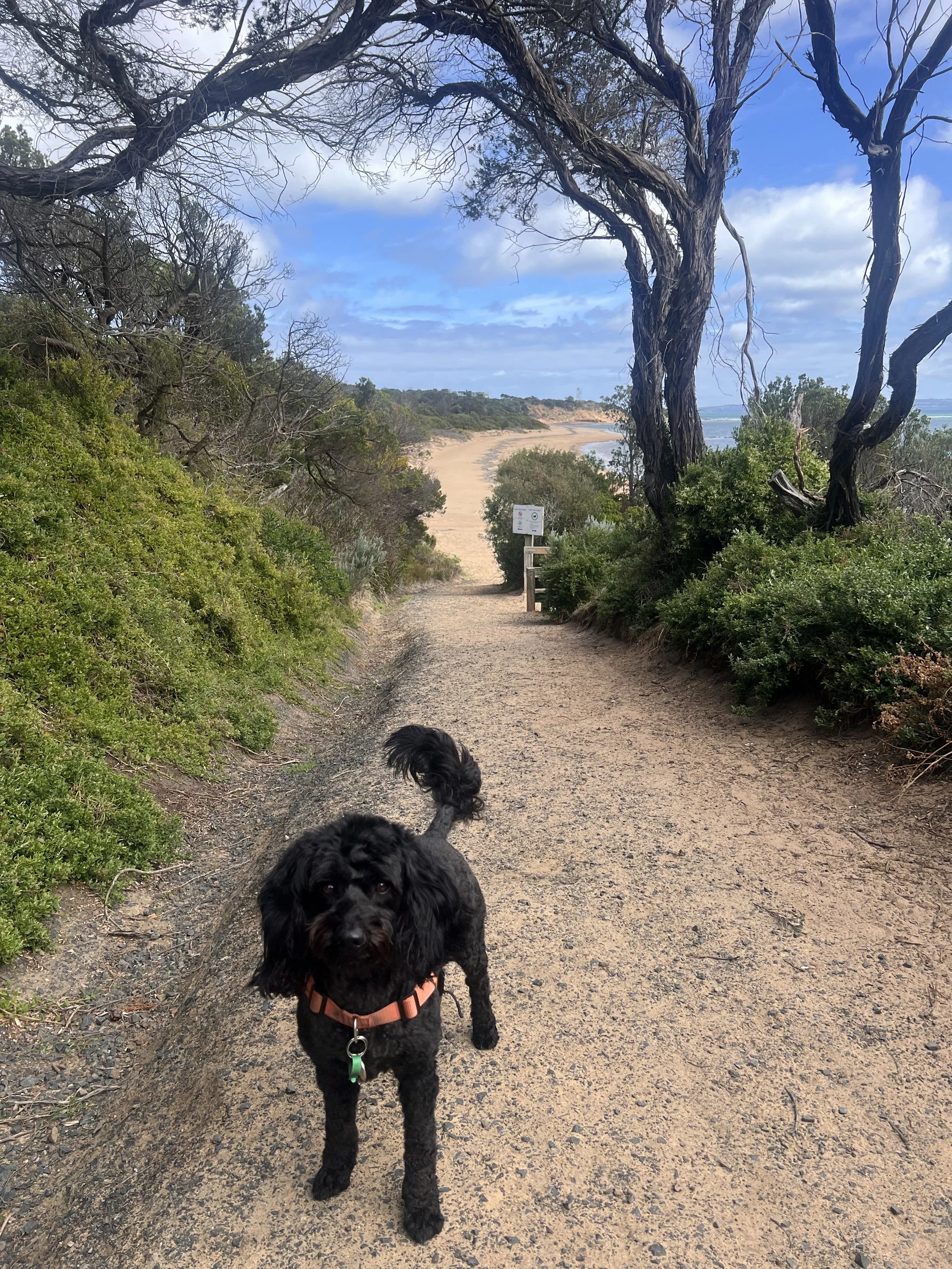
We love the beach - it’s our happy place!
Sources
Chronic Pain Australia, National Pain Week 2026: https://chronicpainaustralia.org.au/painliveshere/
Barbara Walker Centre for Pain Management, St Vincent’s Hospital Melbourne: https://www.svhm.org.au/health-professionals/specialist-clinics/p/barbara-walker-centre-for-pain-management