The Cost of Health: The financial, mental and emotional cost of pain in todays healthcare system (Part 3/3)
This piece is about what chronic pain costs. Some of that cost is money, and I will put real numbers on it. The rest is the effort and the risk that our health system quietly hands back to the person least able to carry it.
The money
In FY25 my out-of-pocket health costs came to about $24,500, of which Medicare returned roughly $4,500. That left me taking a huge financial hit in a year when I had stepped back from earning because my health gave me no choice. The rebate covered less than a fifth of the bill, and the rest came out of savings I had already worked hard for.
It is not only the total that tells the story, but the sheer number of appointments behind it, all inside one financial year. Across FY24-25 I had over 50 clinical and allied health appointments, to reduce pain, prevent major flare-ups or manage them when they came. Fibromyalgia, a well-known syndrome (but not a disease) which is often diagnosed by a rheumatologist, or in my case a neurologist, is not recognised with an item in the Medicare Benefits Schedule (MBS) meaning there isn’t funding for treatment of symptoms. This means all therapies and treatments that keep pain at bay such as Traditional Chinese Medicine, osteopathy, physiotherapy massage and red-light therapy, are all out of pocket expenses.
In the case of endometriosis, financial support, when it comes, is limited and rebates lag well behind the real cost of care. As a diseases, treatment is included in the chronic disease pathway, but funding offers just five subsidised allied health visits a year - indexed at a rate that has not kept pace with inflation - particularly for specialist treatment such as clinical pelvic physiotherapy which is the assessment and treatment of pelvic floor dysfunction. That is the money version of a larger pattern: the system deciding what it will not carry and handing the difference to the patient.
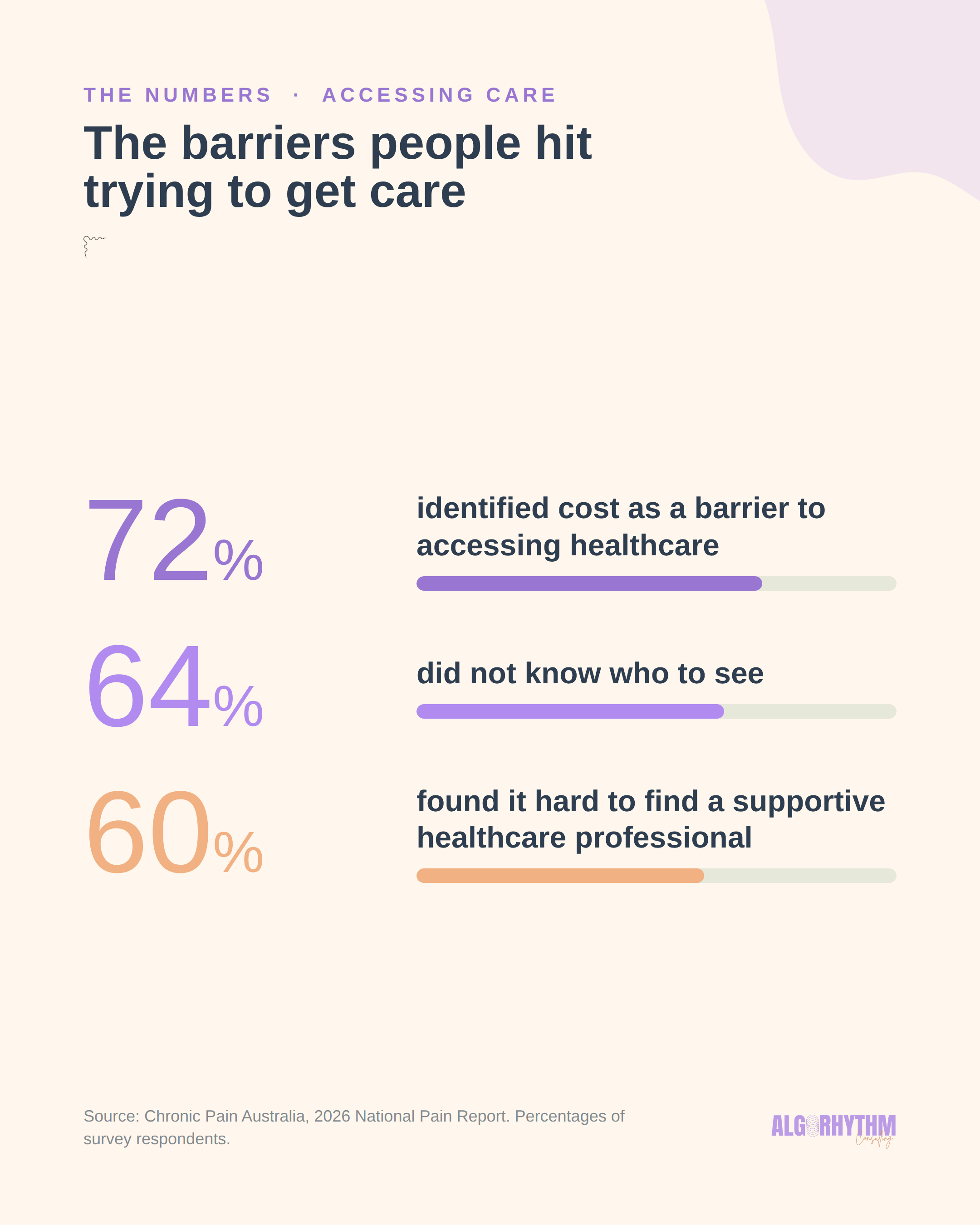
The final thing to add is that none of this is rare: Endometriosis alone affects about 1 in 7 Australian women and people assigned female at birth, more than a million of us. Fibromyalgia affects roughly 2 in every 100 people. More than 5.4 million Australians live with chronic pain, around 1 in 5 of us, and it is one of the country’s leading causes of disability.
The cost that is not money
The same pattern shows up in a second cost, one that never appears on a bank statement, and perhaps this is clearer to me as someone who has worked in the engine rooms of health and care services. The sheer complexity of our health systems quietly offloads the burden of knowing onto the most vulnerable person in the room – the patient. It expects you, likely in pain and often overwhelmed, to carry your own history, connect the referrals, and fill the gaps between one specialty and the next. The information sits across many systems, public and private, state and federally funded, outpatient and admitted, and it does not move seamlessly between them, if at all, because each service is largely standalone and the interoperability between electronic medical records is minimal. Why, in 2026, is it still this hard for clinical information to travel across systems, hospitals and specialties?
So I became the courier of my own records, repeating my history at every new door and carrying reports from one provider to the next because they could not reliably reach each other. When information does not follow the patient, the patient becomes the integration layer, at the moment they are likely least able to do the job.
A good example of this was that I was one of around 500 people on the waiting list for a public pain centre, and the wait ran to 16 months. In that gap there was no interim support and no map of what to do. I filled the time up-skilling on understanding pain so I could understand my own body better, and I could only do that because of who I am and what I know. I have the great privilege of being able to lean on a loving and understanding partner who has supported me to get treatment during the wait, and I can only imagine what the burden of these costs are to someone doing this alone. A waiting list with nothing behind it leaves people in a void, and people deteriorate in voids.
When I finally reached the centre, referred by another doctor, it still did not arrive with my history, so I was asked to recount it from the start, including the hardest and most traumatic parts. Every retelling has a cost. Asking someone to narrate their experiences of pain and when it began is traumatic, and if it’s not managed with the appropriate level of care and emotional intelligence the process risks real psychological and emotional harm to the patient. Care is meant to help, and it should never be built in a way that quietly re-injures the person receiving it- better governance and less politics around the transfer of patient information is a simple way to improve the experience and make it psychologically safer.
What would help
None of these are separate faults. They share a root, a system that was not designed around the patient’s actual experience of moving through it. When no one is holding the whole picture, the patient holds it and pays for the privilege in money, in time, and sometimes in harm.
I am not naive about why this is hard. Funding, legacy technology, privacy law, competing priorities, I know the constraints are real. But wanting a system to succeed means being honest about where it fails the people it exists for. Records that move with the patient, some support for people while they wait, histories that arrive before the patient has to relive them, and financial recognition for chronic pain, none of these are radical asks.
If you work in health, care or policy and any of this lands, I would like to talk about how we do it better. And if you are the one in the queue right now, my door is open.
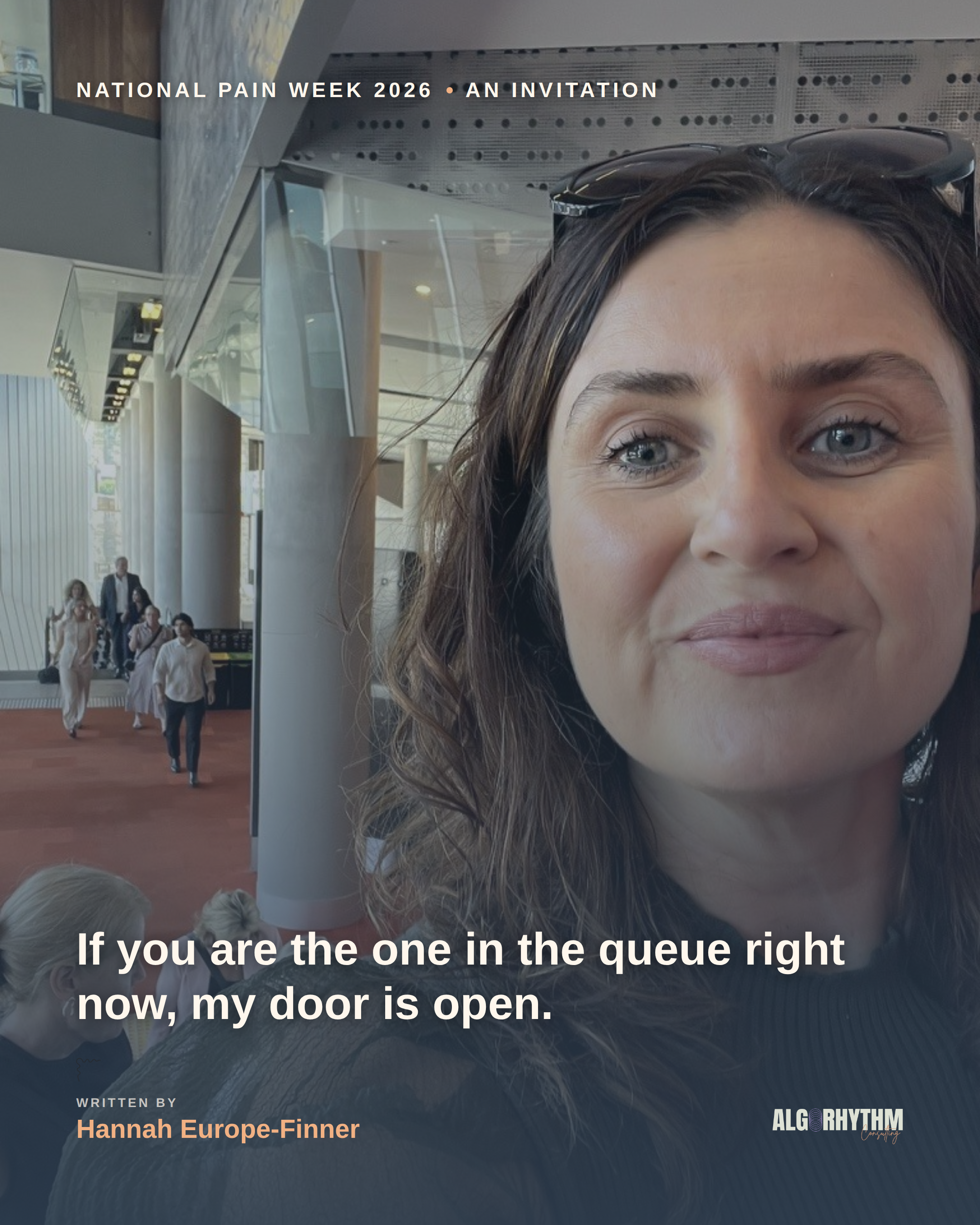
Back on my feet in March 2026 at the Business Chicks International Women’s Day with Jacinda Ardern
Sources
1. Chronic Pain Australia, National Pain Week 2026 (5.4 million, 1 in 5, a leading cause of disability): https://chronicpainaustralia.org.au/painliveshere/
2. Australian Institute of Health and Welfare, Endometriosis in Australia (1 in 7 prevalence): https://www.aihw.gov.au/reports/chronic-disease/endometriosis/contents/about
3. Healthdirect, Fibromyalgia (about 2 in 100 people): https://www.healthdirect.gov.au/fibromyalgia
4. MBS Online, item 10960 physiotherapy (the 5 session annual cap): https://www9.health.gov.au/mbs/fullDisplay.cfm?type=item&q=10960
5. Services Australia, 1 July 2026 Medicare Benefits Schedule changes (indexation; My Health Record default sharing): https://www.servicesaustralia.gov.au/1-july-2026-medicare-benefits-schedule-mbs-changes
6. RACGP, 1 July 2026 MBS update (2.6 per cent indexation): https://www.racgp.org.au/running-a-practice/practice-resources/medicare/medicare-benefits-schedule/1-july-2026-mbs-update
7. Barbara Walker Centre for Pain Management, St Vincent’s Hospital Melbourne: https://www.svhm.org.au/health-professionals/specialist-clinics/p/barbara-walker-centre-for-pain-management