
When “Keeping the Peace” Starts Hurting the Work.
Rebuilding our muscles for hard conversations, honest feelings and hopeful leadership.
March turned into a surprise growth‑spurt month for me. Not in the shiny promotion‑announcement way, but in the sense of sitting in rooms with women who have shaped how I think about work, relationships and being human – and recognising very clearly what I want to do with that in my own practice.
I'm the founder of Algorhythm, partnering with governments, health and community organisations to make complex work simpler and more human. I spend a lot of time inside systems that are under pressure, and I care deeply about how we do that work without burning people out.
This commitment didn't start this year. It's been shaped over years of watching how big systems move, how people cope, and how often we confuse "busy" with "effective". What has shifted this year is my calibration: I've faced the arena (to borrow from Brené Brown), paid closer attention to my body and my business, and stayed curious about how I show up, respond and react when things get hard.
Before I share that "inside out" story, this is the "outside in" view – the ideas that lit the fuse.
In the space of a few weeks, I listened to three people whose work has quietly been guiding me for years: Esther Perel, Susan David and Jacinda Ardern. This sat alongside insights from the brilliant Ben Crowe, Steve Martin and Gary Stevens – whose influence I'll come back to another time. But given I wrote this in Women's Month, it feels right to focus here on the women whose work has been front‑of‑mind for me this year.
On paper it was "professional development". In reality it felt more like being handed a language for things I've been circling for a long time.
Esther Perel: friction as a feature, not a bug
Esther spoke about the importance of physical human connection in the workplace – embodiment – and how the "smoothness" of our online interactions has quietly eroded the depth of our work relationships and, with them, parts of our identity.
Her point was confronting and clarifying: our ability to avoid friction – cancelling at the last minute, cameras off, staying home – has reduced our tolerance for interactions that contain tension or conflict. Leaders and organisations are out of practice at giving real feedback, having hard conversations and addressing underperformance. When that happens, organisations underperform, our collective resilience dwindles and we stagnate.
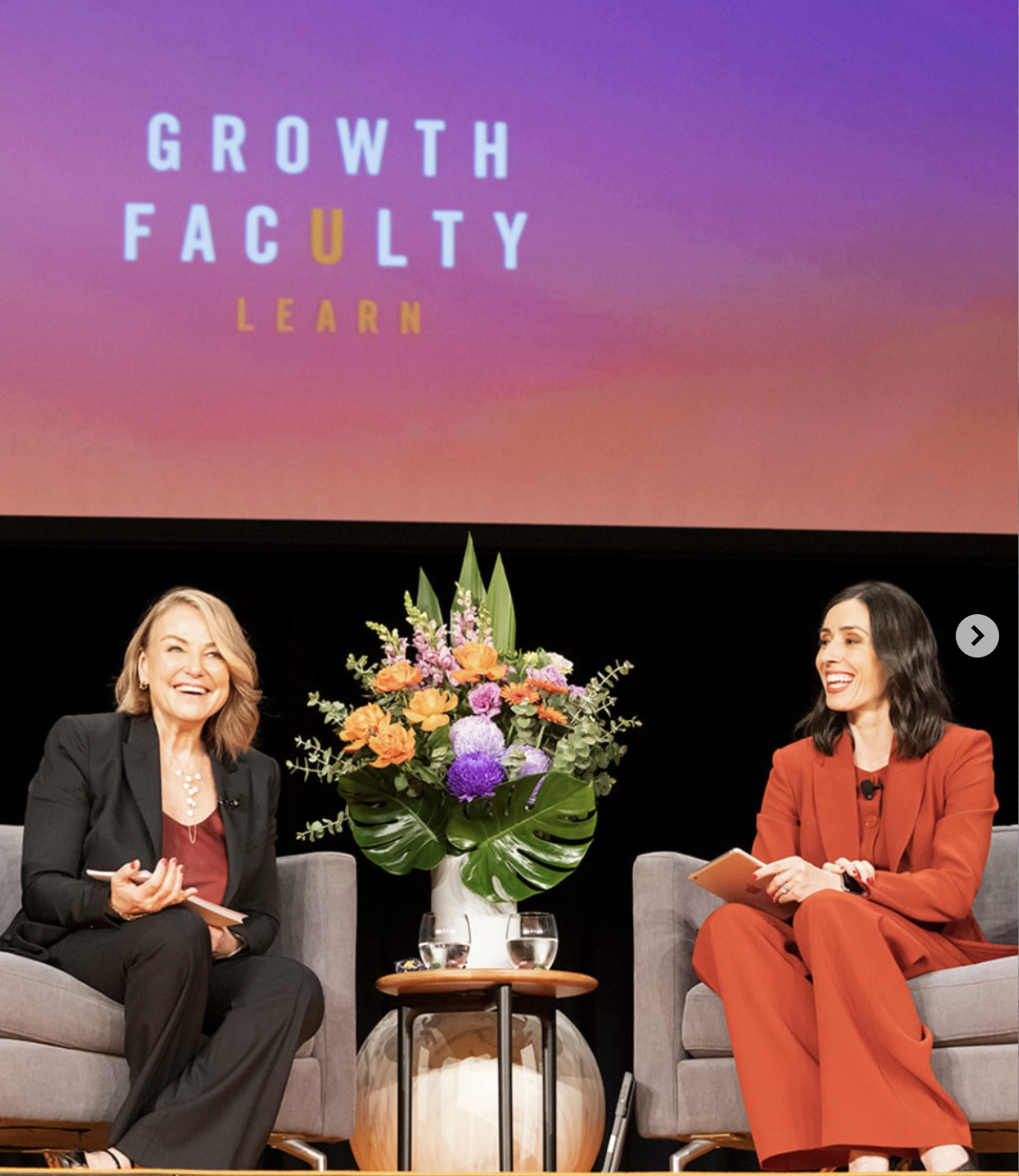
Image Source: Grow Faculty, Instagram post for ‘LeaderSHIFT- from Survival to Transformation’. Esther Perel (left) sits in conversation with MC Holly Ransom (Right)
Because it is the friction that grows us.
As someone who helps teams and organisations navigate complexity, this message went straight in. The most important – and hardest – part of transformational work is the management of change, which I see as different from "change management". Change management is often the plan: comms, training, timelines. The management of change is about what is actually shifting in the system – power, process, expectations, identity.
And when those things move, friction shows up. It sounds like: "It's too hard", "It's so complex", "We don't have the resources", "They never do it when they say they're going to". Cameras go off. Behaviour gets more evasive or quietly disruptive.
If you're leading change in a government, health or community context, you've probably seen this. Projects stall not because the idea is wrong, but because we've dodged the difficult conversations about what's really changing. That's precisely why Esther's reminder matters: smoothness is comfortable, but it's often the friction that tells us where the real work is.
It also made me look at my own work and ask: where am I smoothing too many edges – in workshops, stakeholder sessions, even emails – and accidentally removing the productive friction that actually helps people learn, decide and move?
Susan David: Emotional agility in an AI world
Susan David spoke about her childhood experience of grief after her father's death and the teacher who gave her one simple mechanism to express it: writing. Out of that came the line that's been echoing in me ever since:
‘Lifes beauty is inseparable from it’s fragility’
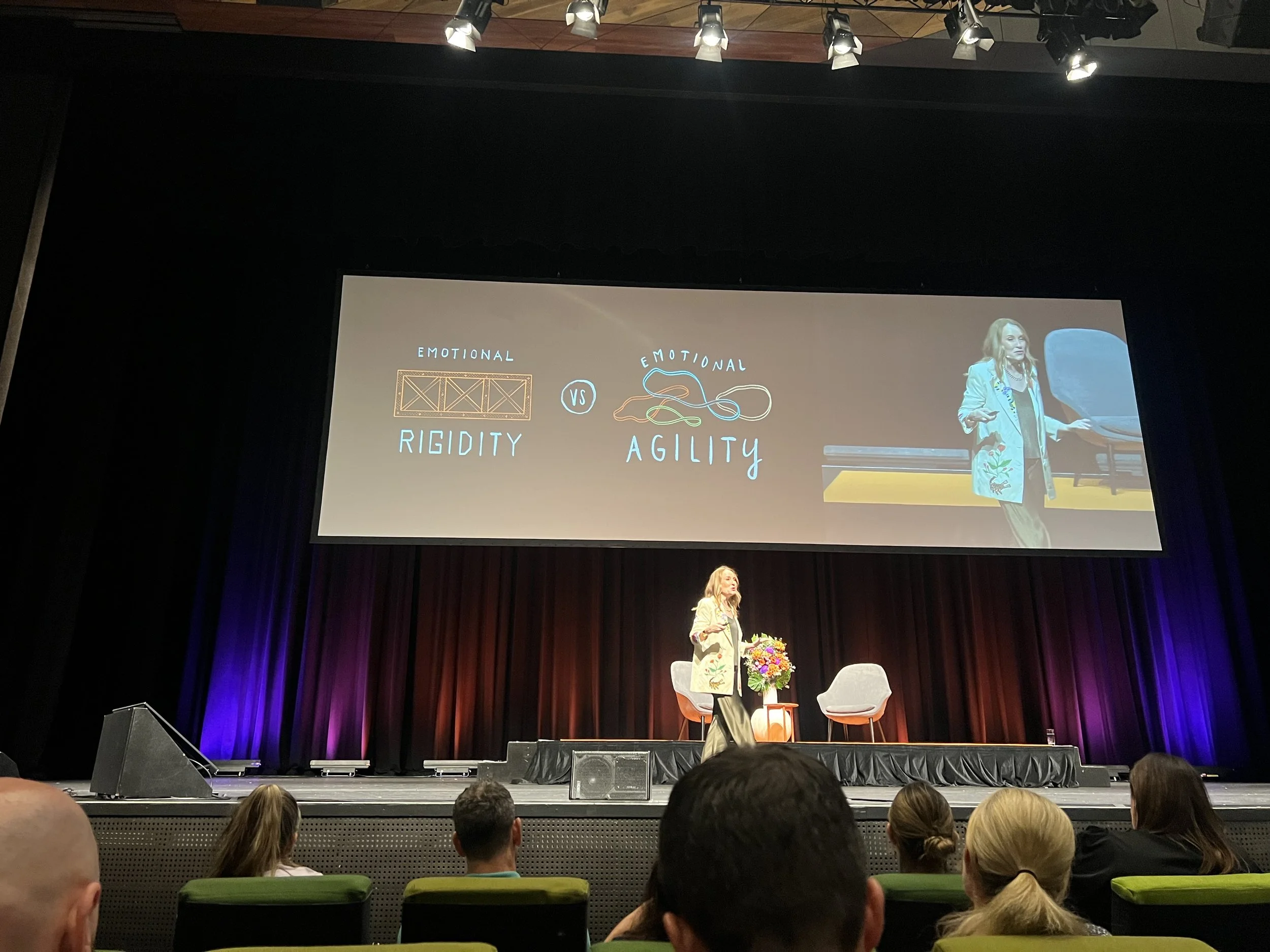
Dr Susan David speaking at LeaderSHIFT on Emotional Agility
David introduced Emotional Agility as four very human steps:
Show up
Step out
Walk your why
Move on
Real resilience, she argued, isn't pretending everything is fine. It's being honest about what we feel and still choosing actions that align with our values. At work and in leadership, that's the difference between:
"I'm fine, we're fine, everything's fine,"
“I'm tired / unsure / stretched and here's how I'm choosing to show up.”
She also named a pattern I see all the time: "rigidity in the face of vulnerability is toxic." When people feel beholden to the modern world and see themselves as victims of circumstance, they cling to "I'm right, they're wrong" and slip into silos, confirmation bias and "values fusion" – where thoughts become facts and there's no room for nuance.
At one point she showed a simple drawing of a body filled with cloud‑shaped emotions, with the words "You are the sky" written around it. That landed after her rigidity point: we are not our weather. Emotions move through us; they're important data, but they don't have to define us.
In the so‑called AI revolution, where knowledge is increasingly commoditised, she reframed the real work as a human‑skills revolution. The question isn't "How do we get more information?" but "Can we support the emotional journey our people have to travel in order to adapt?"
I'm now reading Emotional Agility – or more accurately, I'm taking it on holiday with me – with a very specific question in mind: how can I look at change resistance in a new way? The sector we work in can be brutal. You're often the bearer of bad news, the person naming trade‑offs, the one some stakeholders quietly label the source of all evil.
I'm interested in doing what David suggests: getting curious about those feelings. What happens if, when resistance shows up – in a team, or in myself – I treat it as data about what's changing in the system, rather than as a personal failure or a reason to push harder?
For organisations like the ones I work with, this shifts the question from "How do we reduce change resistance?" to "What are their reactions telling us about what's really at stake here?" This is the lens I want to bring more deliberately into my work.
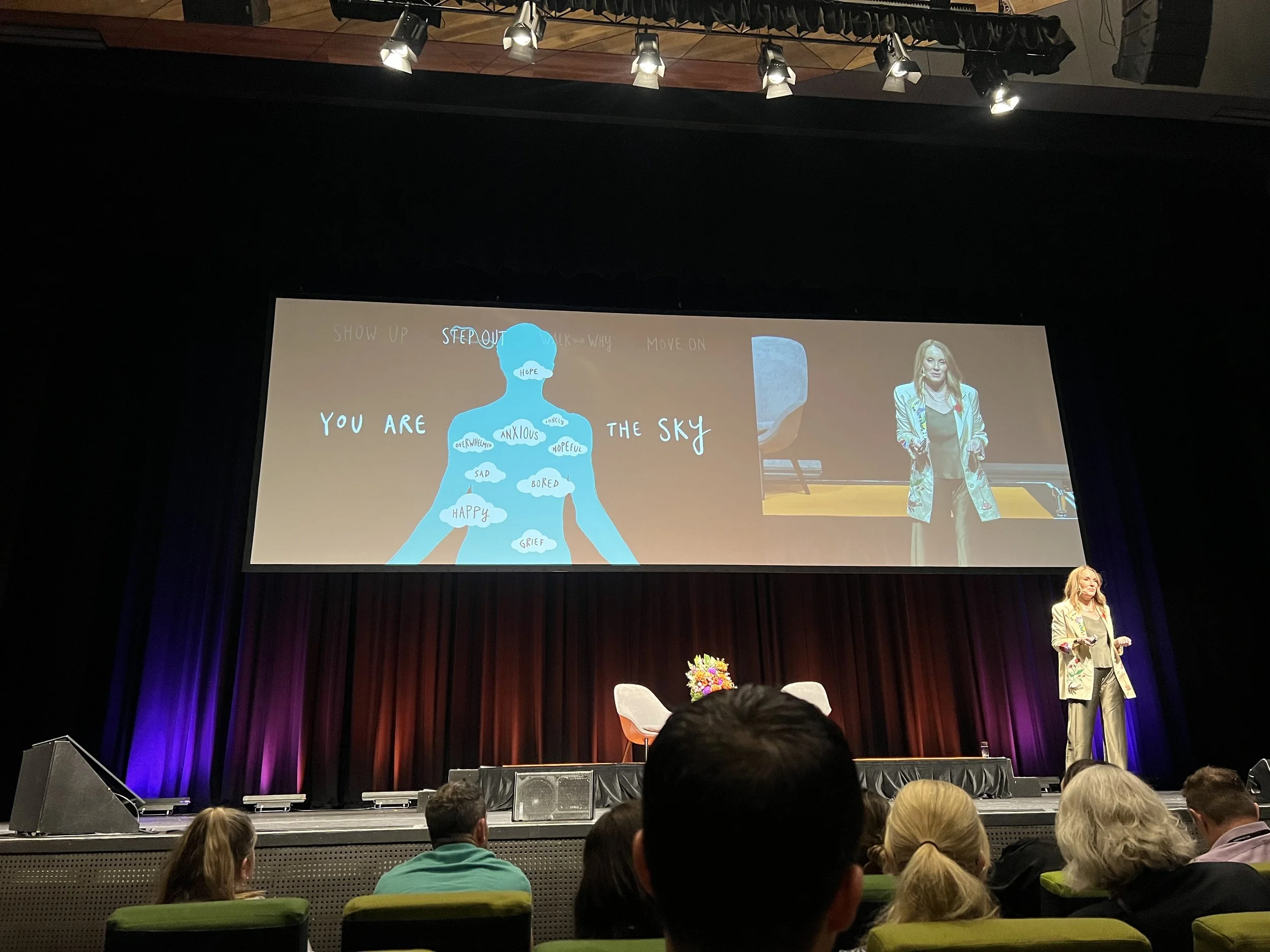
‘You are the Sky’ Step 2 in the approach to emotional agility.
Jacinda Ardern: Optimism as moral courage
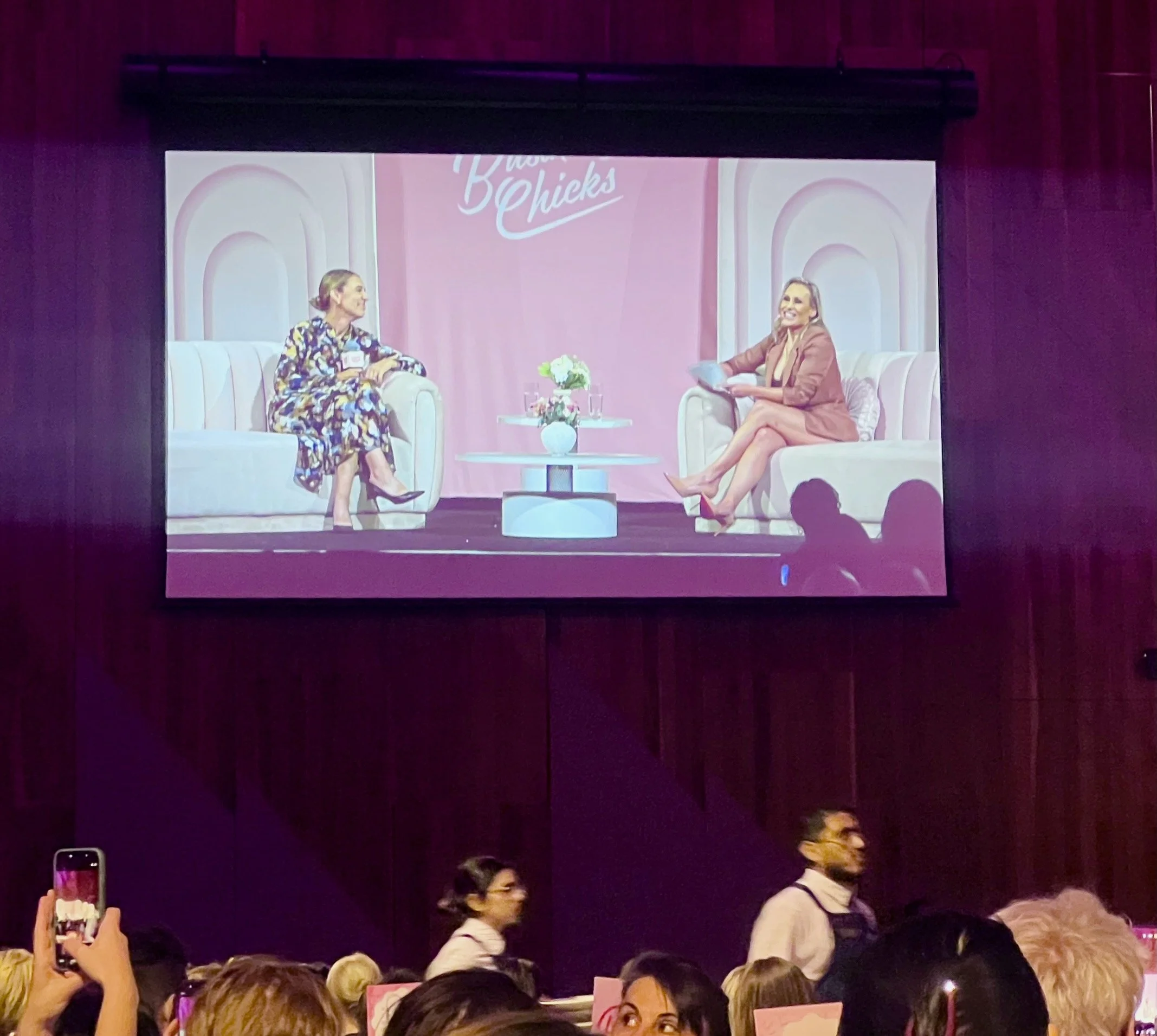
Jacinda Ardern (Left) and Emma Isaacs (Right) in conversation at Business Chicks IWD Lunch
A few days later, fine plates and champagne glasses on the tables, I sat in a pink‑lit room at Business Chicks, Australia's largest networking community for women. Founded and led by CEO Emma Isaacs, I was lucky enough to hear her as interviewer, her wife as MC, and the inimitable Jacinda Ardern as guest speaker.
She said:
"We expect kindness and compassion from our children… but question those same qualities in our leaders."
The room went very still as every single person sat with the dissonance.
Ardern was warm, funny and talked about wanting to call an Uber on her first day in office, about never really seeing high office in her future, and joked, "If you insist on calling me Dame, we're in Australia after all, so you should call me Dame‑o". The through‑line was clear: leading from values isn't soft, it's demanding.
She spoke about Sir Ernest Shackleton, as a source of longstanding inspiration, specifically citing his leadership, optimism, and commitment to crew safety during the Endurance expedition (1914–1917) to the Antarctic. She shared a Shackleton quote that has guided her for years:
"Optimism is true moral courage."
And she closed with the sentence that has become a quiet anchor for me this month:
"You can do extraordinary things if you just get out of your own way."
As someone who has spent the last year learning very concretely where my limits are – and how powerful it is to respect them – this landed as an invitation to notice those internal voices and acknowledge their purpose, then press mute on the audio .
So readers, i ask you something similar: what would it look like to design for optimism, not as spin, but as a courageous, values‑aligned stance, in amidst complex, ambiguous and uncertain times?
How i’m taking this to my work
Taken together like a braid, I want those three threads to shape how I show up as a leader":
Friction: I'm deliberately building more honest, constructive tension into the way I design conversations – the kind that helps people move, not stall.
Emotional agility: I'm being clearer that feelings and values are part of the brief, not a side‑effect of change.
Optimistic courage: I'm backing myself, and my lived experience, as an asset in work with organisations under strain.
Over the last six months, this has played out in very real ways with clients where we've been working through complex challenges without pretending everyone has unlimited capacity or perfect clarity. That's the kind of work I want more of.
I walked out of these events feeling incredibly privileged to have seen these women in person and also very grounded in my own lane. It hits differently to fan‑girling from behind a screen. Being in the room, then going back to my own clients and projects, has made me sharper about what I say yes to and how I want to lead.
Up next…
In a companion piece, I share the other side of this growth spurt: an extended break from paid work, major surgery, a nervous system that is, quite literally, allergic to stress, and what it looks like to design work around that reality rather than in spite of it.
Right now I'm especially interested in working with people in community, women's and health settings who are carrying a lot and want to create work that is kinder to humans and clearer in its impact. If that's you and you're sitting with a complex, slightly messy piece of work, I'd love to talk about how we might approach it differently.
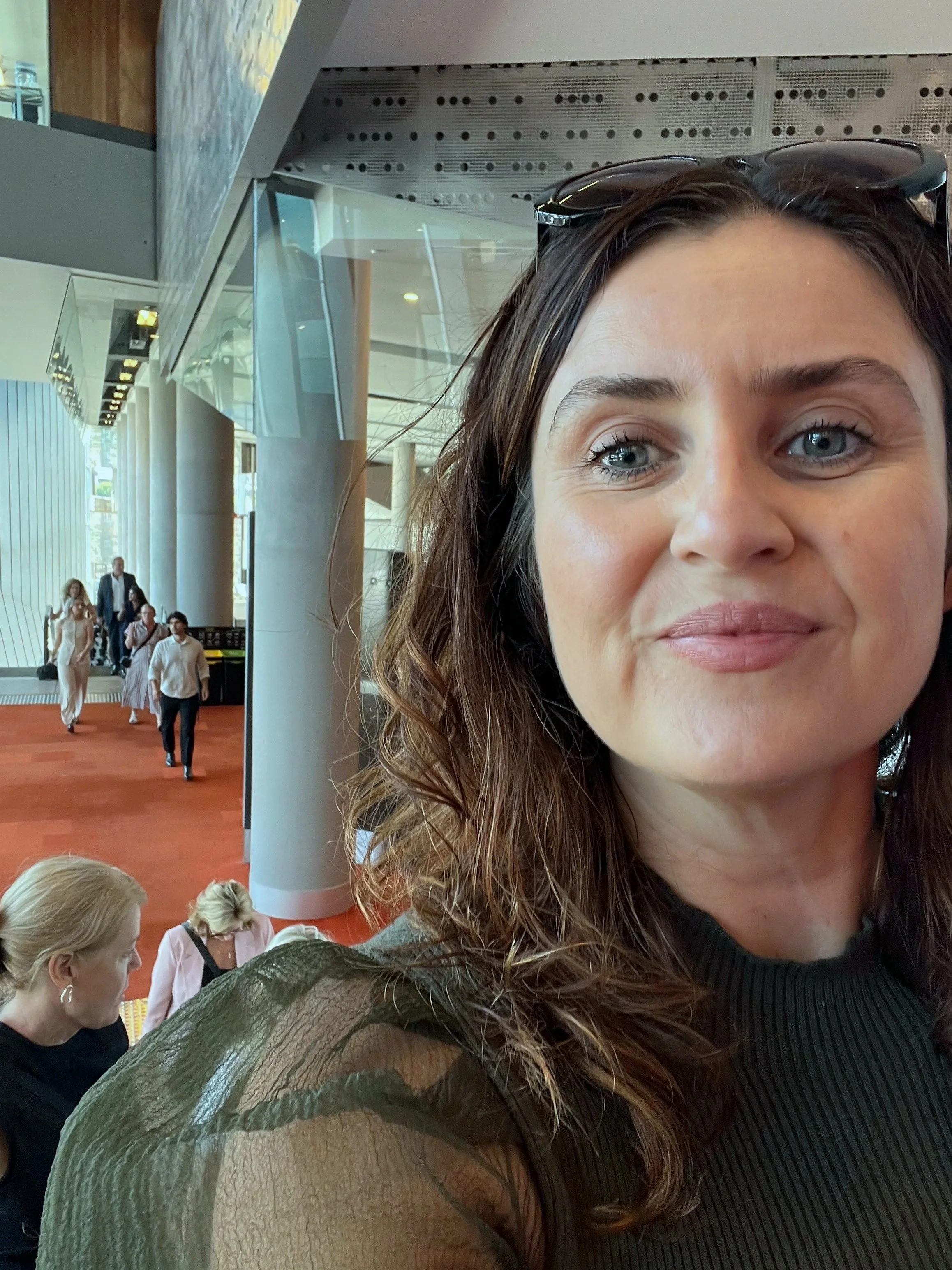
Hannah at the Melbourne Convention and Exhibition Centre in March 2026